
Embryo Grading
Embryo grading can look like a confusing mix of numbers, letters and days, but each part is simply describing something different about the embryo. The number tells us how expanded the blastocyst is, the first letter describes the inner cell mass (the cells that may go on to form the baby) and the second letter describes the trophectoderm, which contributes to the placenta. The day tells us when the embryo reached the blastocyst stage, usually day 5, 6 or 7.
Grading is useful because it helps embryologists describe and prioritise embryos, but it is not a guarantee of outcome. A beautifully graded embryo does not guarantee pregnancy, and lower-graded embryos can absolutely still result in healthy babies.
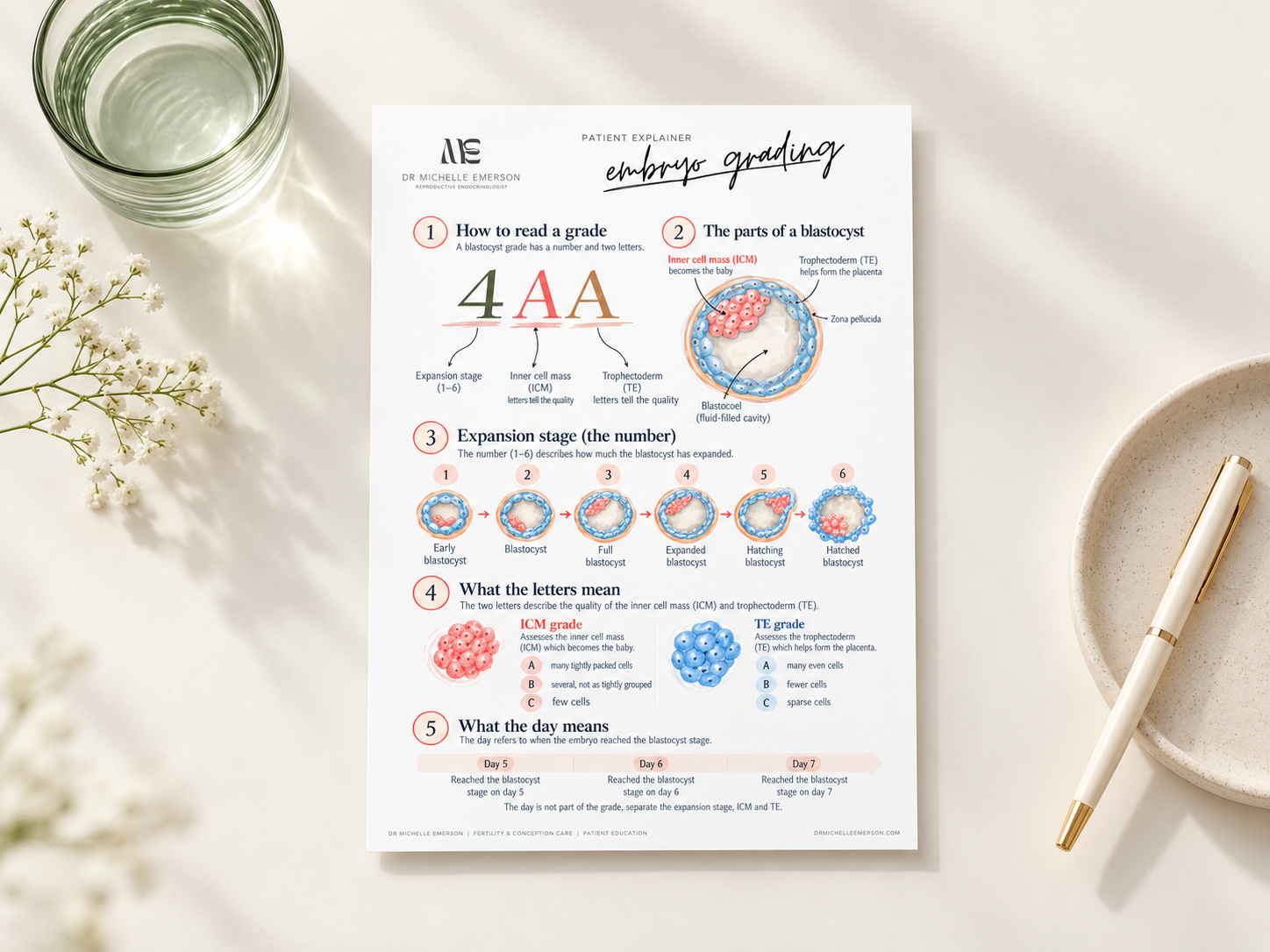
A clear, patient-friendly guide to understanding how blastocysts are graded in IVF. It explains what the number and two letters mean, identifies the key parts of a blastocyst, shows the stages of blastocyst expansion, and outlines how the inner cell mass and trophectoderm are assessed. It also explains the significance of embryos reaching the blastocyst stage on day 5, 6 or 7. Designed to make embryo grading easier to understand without overwhelming patients without too much technical detail.
